Sunday, June 10, 2012

Trip to China (Part 1) – Dongyang Woodcarvings City


Last year my blog was mostly about the attractions in town such as Burnaby Village Museum, VanDusen Botanical Garden and Capilano Suspension Bridge. This summer I will share my overseas trips – China and Japan.  Recently many overseas Chinese joined the special Jiangnan tour for CAD 49.00 plus airfare and I was one of them.  It was an exciting trip since I had never been to Jiangnan before and I was curious as to how attractive this area could be since Qianlong Emperor of Qing Dynasty visited Jiangnan so many times (乾隆下江南). Basically the 7 day tour included visit of Shanghai, Suzhou, Hangzhou, Wuxi and Nanjing in 江南 (Jiangnan). 江南泛指長江以南地方,但更多時專指長江下游,江蘇南部和浙江 (Jiangnan refers to south of the Yangtze River—a region in the lower Changjiang (Yangtze) valley, including southern Jiangsu and Anhui and northern Zhejiang).  

I travelled to China in mid-October last year by flying to Shanghai Pudong International Airport first. The tour guide picked us up from the airport. There were 24 people in our tour including 14 from Australia, 6 from Canada, 2 from US and 2 from New Zealand. Even though we were all Chinese, it was my first time meeting overseas Chinese from Australia and New Zealand. We had several seniors in the group with the eldest of age 83.

The highlight of first day trip was Dongyang Woodcarvings City 東陽木雕市 located in Zhejiang province. Dongyang wood carving has long history since it was developed in Tang Dynasty (618-907). During Qing Dynasty (1736 – 1796), over 400 Dongyang craftsmen were asked to produce the royal carvings in the Imperial Palace in Beijing.

Here are some of the exquisite woodcrafts made by Dongyang craftsmen. Our tour guide described their masterpieces as 鬼斧神功.

This one is a very simple craft work but I would like to post it here since we have many cute squirrels in Vancouver!

柳毅傳書 - carved in 1980s using basswood (椴木). 柳毅傳書 (Liu Yi-The Messenger) is one of the famous Chinese legends.

Carving of Legend of the White Snake (白蛇傳), a very famous Chinese folk legend.

 Lotus in Water - carved in 2002 using basswood

 A set of boxes, hundreds of birds worship the phoenix - carved in 1960s using camphor and basswood.

 Wood sculpture of human figure – beauty of an ancient woman.

Besides woodcarvings, Dongyang is also famous in bamboo plaiting and carving. Here’s a fisherman figure made of bamboo.

Thursday, December 29, 2011

New Year Wish for Baby Pigs


Happy New Year! Not only to humans but also to piglets! Recently the international animal rights have been very active in shark fin ban and the result is becoming successful. Shark fins will no longer be sold or used in food in California starting in 2013 … Hong Kong top hotel, Peninsula, will stop serving shark fin soup in 2012... No doubt I agree the prohibition to protect the sharks since their fins have been used extensively for soups at Chinese weddings and banquets. But besides the shark fin soups, there is another popular dish at Chinese weddings or banquets that contains cruelty, at least in my opinion. It is 乳豬 or roasted suckling pig! As its name means – suckling pig is a piglet fed on its mother's milk and is slaughtered between the ages of two and six weeks (燒乳豬是將二至六個星期大,仍未斷奶的乳豬宰殺).


How brutal and inhuman to kill the lovely baby piglets to satisfy humans stomachs!!! Why didn’t the world try to ban the practice of roasted or cooked suckling pigs? Because the use of suckling pigs for dishes is also happened in Western culture especially the Spanish-speaking countries such as Spain, Cuba, Puerto Rico, Colombia, Peru, Costa Rica and the Dominican Republic. It is also a recipe in Southern United States and Germany. I know it’s not easy to convince everyone not to eat suckling pigs but at least I wish people would think twice and have mercy on the cute little piglets before they start eating them.

Sunday, October 9, 2011

Dr. Sun Yat-Sen Classical Chinese Garden in Vancouver

Tomorrow will be the 100th anniversary of 1911 Chinese revolution (辛亥革命). This revolution was started on October 10, 1911 led by Sun Yat-Sen (孫中山 or 孫日新) to overthrow Chinese imperial system which had been existed for over 2000 years. I visited Dr. Sun Yat-Sen Classical Chinese Garden (中山公園) in Chinatown, Vancouver on July 17. Built in 1985 and officially opened in 1986, it is the first full-scale classical garden constructed outside of China. It is modeled after private classical gardens in Suzhou during Ming Dynasty (1368 – 1644). Since it happens to be 100th anniversary of 1911 revolution, I posted the photos of Dr. Sun Yat-Sen Classical Chinese Garden.

Since Song Dynasty (960 – 1279), Suzhou has been an important centre for silk industry.


A classical Chinese garden has four main elements:
Buildings – such as pavilions and covered walkways
Rocks - especially Tai Hu limestone rocks from Suzhou
Plants – such as pine trees, plum trees and bamboos
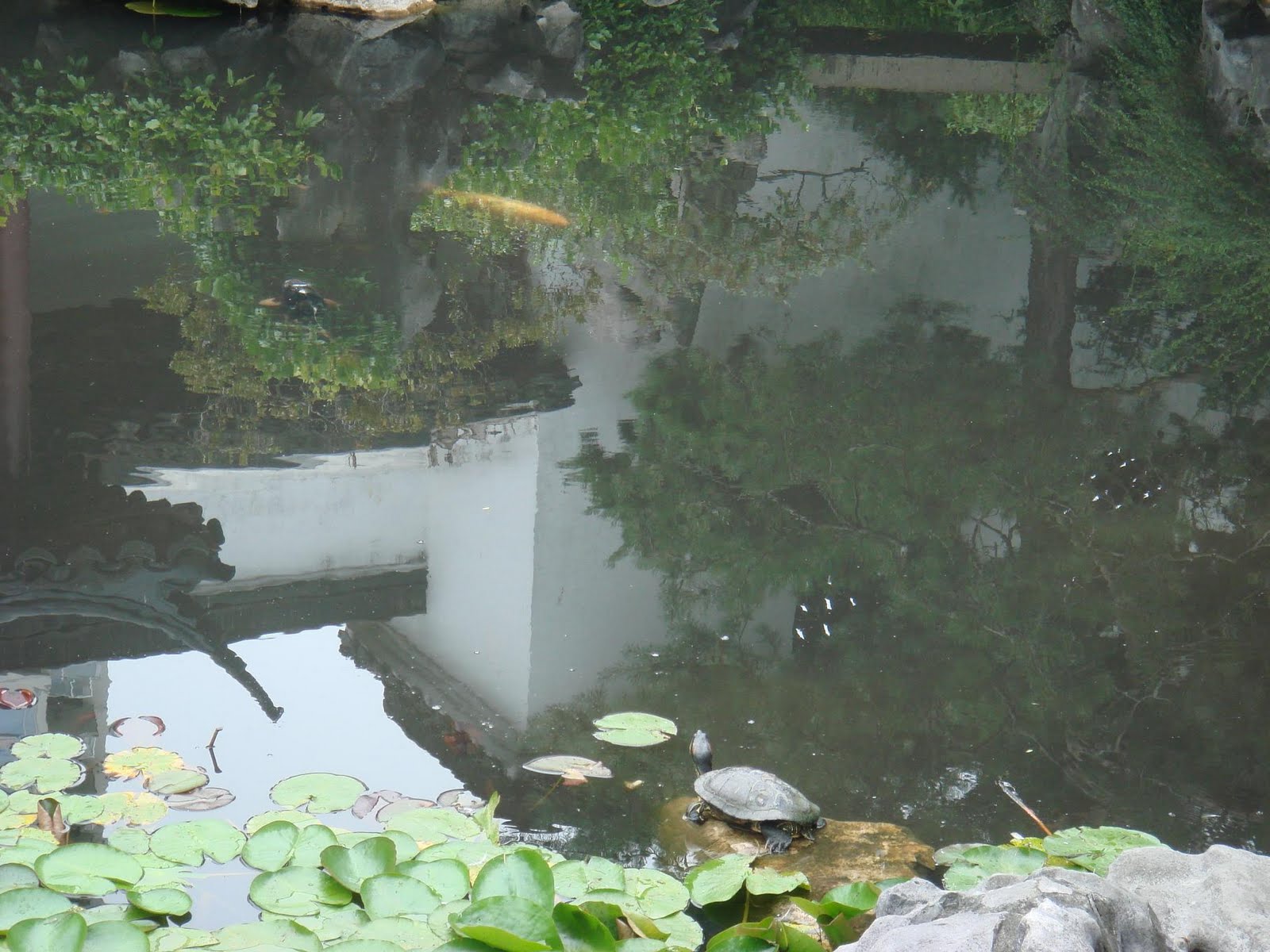
Water - a central pond with koi fish, and sometimes turtle and mandarin ducks

Photo Below: I believe this is called "Moon Gate" - a moon-shaped doorway

Poetry is also an important element in a Chinese classical garden. Poems can be found anywhere in the garden – inside or outside the buildings and sometimes craved into rocks. Poetry is the way people express their feelings of the beauty and nature in the garden.


I think golden Koi fish symbolizes luck and wealth, turtle symbolizes longevity in feng shui concept.
A very cute little blond girl is watching the Mandarin ducks. In Chinese culture, Mandarin ducks represent a life-time couple with love and romance. They are called Yuan-Yang 鴛鴦 and always in a pair.
In Chinatown, there is a Dr. Sun Yat-Sen Park next to Dr. Sun Yat Sen Garden. Unlike the garden, the park is free to the public. The difference is the garden was constructed by Chinese artisans and craftmen using materials from China while the park was constructed by local architects and workers using materials from North and South America.


I'm glad to have a chance to visit this garden before I visit the classical Chinese garden in Suzhou this October (a week from now). This garden was constructed by master craftmen from China using traditional methods with no glue, screws or power tools. Everything was consturcted in accordance with feng shui and the balance of yin yang to create a harmony environment. Now I know what to expect when visiting the famous Chinese garden in Suzhou!

Tuesday, September 27, 2011

Canada Day Parade in Steveston Village


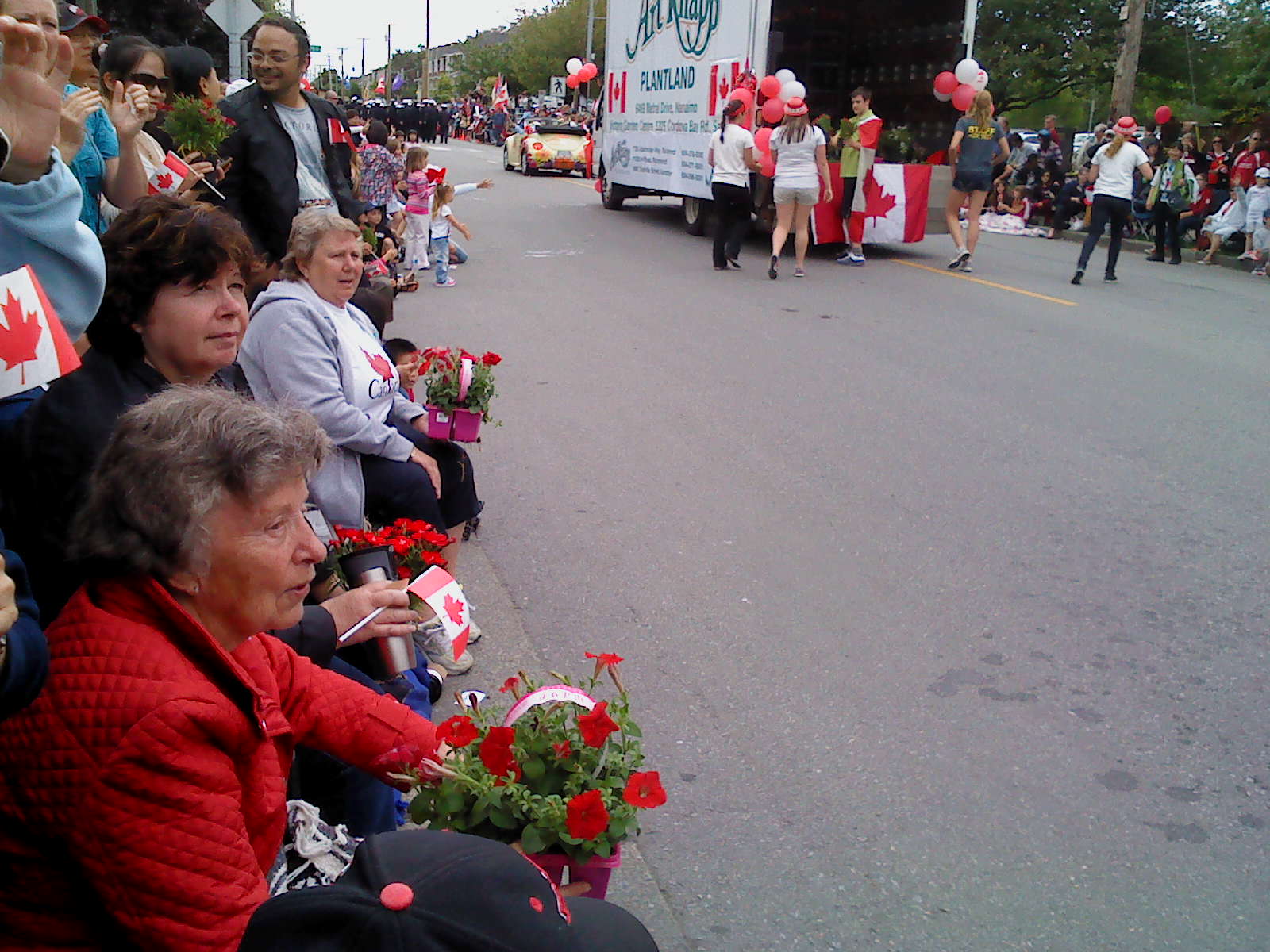
Every year there is a parade in Steveston on Canada Day (July 1). This year was the celebration of 66th Annual Steveston Salmon Festival and the parade ran from 10 am til noon with over 100 participating entries including marching bands, politicians, sport teams such as hockey and badminton, old-fashioned buses, police, firemen, large supermarket/retailers such as Save-On-Food, community and cultural groups, etc. Pets (dogs) were involved in the participating entries too! Lots of freebies were handed out – Canadian flags, candies, chocolates and nice flower pots from Art Knapp!