Thursday, June 20, 2013

Japan Trip - Day 1 (November 2012)


I travelled to Hong Kong at the end of last year and took the chance to visit other Asian countries including Japan, Singapore, Malaysia and Thailand. Let’s talk about Japan, the first one I visited in chronology. I arrived there around 10 pm on November 20, 2012 so the 1st day of my Japan trip was more likely on November 21. I stayed there til November 25. Same as last time, my Japanese friend accompanied me. On November 21, we took a 3 hour train from Nagoya to Kanazawa (金澤市). By the time we arrived it’s already passed noon so we had lunch in one of the restaurants nearby Kanazawa train station. I ordered sashimi lunch set from its colourful menu.


OH! I didn’t expect a Hong Kong dim sum restaurant by its train station J


Take a close look at its menus … what do you think? Authentic or Japanese-style dim sum? I wonder if the chef is Chinese or from Hong Kong?


After lunch, let’s go to the first tourist attraction – Higashi Chaya (Tea House) District 東茶屋街. Briefly speaking, chaya is a traditional restaurant where guests are entertained by geisha (Japanese female entertainers) who perform songs and dances since the Edo period. The largest chaya district in Kanazawa is Higashi Chaya District which is designated as Japan’s cultural asset. Many old buildings there have been converted into restaurants, teahouses and souvenir shops. Because Kanazawa is the centre of gold leaf production in Japan, we found many products with gold leaf (金箔) in its souvenir shops such as facial gel, facial oil blotting paper, bath salt …


Not far away from Higashi Chaya District is Utatsuyama Temple Area 卯辰山 where numerous Buddha statues, temples and shrines are located. Sounds like a very spiritual area. Originally I wanted to see a giant Buddha statue at an outdoor site. Due to my limited energy and the complicated trails on the mountain, I decided to give up. Luckily I could still find a statue of Bodhisattva 觀音菩薩像 at the foot of the mountain J


In the evening, we had dinner in an underground restaurant situated in the downtown area of Korinbo 香林坊. We ordered hotpot dish, local crab, miso congee (above pic on the left) & soup of mashed lotus root which was a nice surprise! Edible gold leaves 金箔 were found in the soup (above pic on the right) J It was my first time eating gold leaf … normally food with gold leaf such as mooncake 金箔月餅 is quite expensive. But the soup wasn’t expensive at all since lots of gold leaves are produced in Kanazawa.

Sunday, May 26, 2013

Another Display of Old Hong Kong

Surprisingly discovered some valuable pics of old Hong Kong in the Hong Kong International Airport. It was on November 20, 2012, the day I flew to Japan. I was completely attracted by this small gallery and almost missed my flight! ~好險啊~


No. 5 is an interesting one since I’m from Canada!


I think this is more like English - Cantonese dictionary. But some terms are outdated already … there is no more telegram. 確係弊 sounds like an old term during 粵語長片 period.


This is a diary of income and expenditure. It reminds me that I haven’t practiced Chinese calligraphy (書法) for more than 20 years. I used to hate this kind of homework … spending 3 hours to copy a chapter with a brush (毛筆) instead of 1hour with a pen. But suddenly I want to do it now!

Display of Old Hong Kong

Last summer, there was an exhibition of old Hong Kong called “In My Life, Pearl of the Orient – Hong Kong” in Aberdeen Centre which refreshed my memory of the childhood.


The first picture shows a corner of a living room back in late 60s or early 70s. It has a black analog phone, Two Girls florida water and talc powder (Two Girls is a renowned Hong Kong brand established in 1898) and an old-fashioned radio. At that time, listening to radio wasn’t free, it required a monthly payment.

Below are photos of mini showcase of dim sum carts …


Nowadays we rarely have restaurants with dim sum push carts. This was very common til gradually replaced by menu order (即叫即蒸) in the 90s. When I was in Hong Kong, I was okay with 蝦餃燒賣 (shrimp & pork dumplings, the most popular dim sum dishes). After coming to Canada, it was even nicer with double size or jumbo size 蝦餃燒賣 ! After few years of weekly jumbo jumbo jumbo dumplings 每週 or 週週特大蝦餃燒賣,  I was reluctant to eat them anymore. But now I’m okay to have them once in a while.


What is your favourite sweet soup?
紅豆沙 - red bean
綠豆沙 - green bean
芝麻糊 - black sesame
咋喳 - mixed bean
西米露 - tapioca

During my childhood, my family often had dim sum after picking up my little brother from kindergarten at noon and before the start of my afternoon class (I was studying 下午班 ), somehow my mom always ordered 咋喳 “ChaCha”(mixed bean sweet soup) for me and I always accepted it. So she thought it was my no. 1 favourite! Actually I was just ok with 咋喳 but not at the level of dying for it.


Hmmm… I really miss the yummy colourful dessert cart, my favourite is the jello cup decorated with a mini umbrella on top.


Now we either have to wait to be seated or make reservation. Back to 30 years ago, it was common to find the seats ourselves. Every time we went to a Chinese restaurant, we would look around to see which table would likely be finished shortly. It really depended on luck since our guess could be wrong … sometimes people had a long chat before asking for the bill, sometimes they liked to order more dim sum when the table was empty. To minimize this problem, my family (dad, mom, me & my brother) would 兵分四路 pick a table individually & wait separately. Whoever got a table first would inform other members by a bit of yelling or waving hands (remember there was no cell phone for communication at that time). Sometimes we may have to share the table with strangers (example: a large table of 10 but we only had 4 persons).

In the middle of our dim sum, we often heard “Done Done Done Done X先生請聽3號線電話” (an announcement of “Done Done Done Done Mr. X, please answer phone no. 3”). Nowadays this doesn’t happen anymore since almost everybody has a cell!


Hong Kong Style Café (茶餐廳) – used to call 冰室 in the past. Even though the menu is not too healthy, it’s very delicious with very reasonable price! I really love 西多士, 火腿通心粉 & 凍檸水 (Hong Kong style French toast topped with syrup and butter, Hong Kong style cold lemon water & shredded ham with macaroni in soup). YUMMY!


We may still be able to see traditional handmade sweets stall on the street in Hong Kong but not too many thou


Many traditional grocery shops have been replaced by super markets. Today the eggs are all packed in a carton in the super markets. I still remember how they did it in the grocery shop when I was a little kid. Customers could choose the eggs ... just pick one and put it under a light to see if the egg yolk was intact, then place the flawless egg in a red round-shaped plastic basket provided by the store. Repeated the same procedure for the second, third egg etc. Once the customer finished picking eggs and paid, the eggs were wrapped by newspapers, I think.

Monday, April 1, 2013

Memory of Leslie Cheung (September 12, 1956 – April 1, 2003)

Today, April 1st, is the 10th anniversary of Leslie Cheung’s death (張國榮逝世10周年).

I’ve written about him four years ago and asked if anyone knows where to buy the video of his summer concert 1985. I love the concert very much and it’s the best concert I have watched so far. Luckily someone named MJendlesslove posted the whole concert on Youtube last year, very appreciative!

Here is Leslie in Concert 85 (張國榮演唱會85) held in Hong Kong Coliseum (香港紅磡體育館) between August 2 and August 11 in 1985. It is divided into part 1 and part 2:


Leslie also released a CD “夏日精選-全賴有你” (Summer Best Collection - Depends on You) in 1985 with many wonderful songs recorded for the beautiful and refreshed summer. One of them was called 留住昨天 …


Monday, August 6, 2012

Congratulations to Lee Wai Sze!


Hong Kong cyclist, Lee Wai Sze, won a bronze medal in London Olympic 2012! 恭喜李慧詩! She did a very great job in Women's Keirin on August 3. This is the 3rd Olympic medal for Hong Kong in history. Coincidently, she studied at Bishop Paschang Memorial School 柏德學校 in Lower Ngau Tau Kok Estate 牛頭角下邨, the same elementary school as me J

Monday, July 30, 2012

Trip to Japan (Part 7) - Tokugawa Garden and Sakae


Next morning, we visited Tokugawa Garden where we didn’t have time to go on the other day, and Sakae District where my friend often said it’s comparable to Downtown Robson in Vancouver. But first my friend took me to Komeda’s coffee since I wanted to try Japanese style breakfast in a coffee shop. It was just few blocks from my hotel in Marunouchi 丸の内.


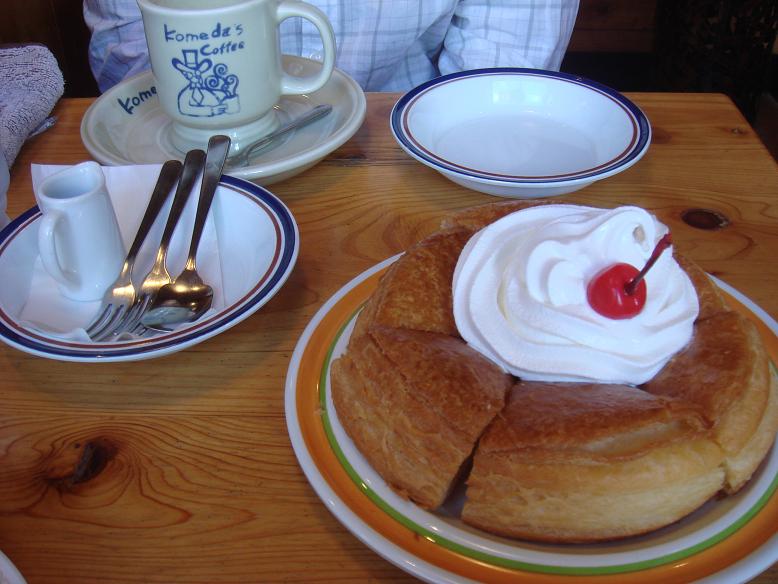
Based on my web research, the Nagoya-based coffee shop Komeda コメダ珈琲店 is one of the largest coffee house chains in Central and Western Japan. Komeda was established in 1968 and to be different from other modern coffee chains such as Starbucks, Komeda's coffee shops feature old-fashioned atmosphere with wooden walls and furniture, magazine rack and an old style menu. Staffs would take customers’ orders at their tables. Same as some Japanese restaurants, customers are allowed to smoke in the coffee shop.

The menu was very colourful! It offered hotdogs, sandwiches, salads, snacks, pastries, hot lemon tea, hot and ice coffee, etc. Let’s try its feature breakfast combo: purchase of a drink with complimentary set of a boiled egg and buttered toast (好低呀! 買飲品送隻蛋同多士!). I also tried its famous Shirono-whirl which was a Danish pastry topped with soft ice cream plus a cherry.


After the nice simple breakfast, we took subway transit to Ozone Station 大曽根 and then walked for 15 minutes to the Japanese garden: Tokugawaen 徳川園.

Tokugawaen or Tokugawa Garden  徳川園 is a nice example of chisenkaiyu style garden in Edo period (江戶時代的池泉回遊式庭園) where a path is surrounding a pond. It was like a stroll garden with view and perspective changing as we wandered along the path. Admission fee was only ¥ 300, less than 4 bucks in CAD!

The garden was built in 1695 as a retirement villa for Tokugawa Mitsutomo 徳川光友, the second lord of Owari (today’s western part of Aichi Prefecture) 尾張藩第二代藩主. Tokugawa Mitsutomo’s father Tokugawa Yoshinao 徳川義直 (the first lord of Owari) was the 9th son of Tokugawa Ieyasu 徳川家康, the significant Japanese warrior who founded the Tokugawa dynasty of shoguns 德川時代 (or called Edo period 江戸時代) in Japan. Tokugawaen was destroyed in World War II and reopened as a Japanese garden in 2004.

I could see the rocks, plants and bridges were arranged elegantly to reflect the beauty of Japanese nature. Let’s name some of the photos above from left to right:

1st photo - Tiger's Tail River (虎の尾/ TORA NO O)

2nd photo – Ozone Waterfall (大曽根の瀧/ OZONE NO TAKI) where a three-tiered waterfall of 6m can be found at the upstream of Tiger’s Tail River. The mountain behind the waterfall is the highest mountain in Tokugawaen.

4th photo – Sei Lake Bund (西湖堤/ SEIKOTEI) is a miniature of the levee parting the lake surface of West Lake in Hangzhou, China. I think it is the imitated Su Causeway (仿蘇堤) since the Japanese brochure mentioned the name 蘇東坡. I’ve been to Hangzhou West Lake but it was in a rush that I couldn’t pay detailed attention to all the scenic spots so I’m really not too sure which causeway is imitated here.

Anyways there are similarities and differences between Chinese and Japanese gardens. Early Japanese gardens were modeled upon Chinese gardens, gradually Japanese gardens had their own distinct appearance.

5th photo – Koi pond (錦鯉/ Nishikigoi in pond). They were all swimming toward me for food. .. sorry I got nothing to feed them.

Photo on top of “Trip to Japan (Part 7)”– me by the Dragon’s Gate Waterfall (龍門の瀧/ RYUMON NO TAKI), the name is derived from a legend of fish transforming into dragon after swimming up to the top of the waterfall.


As a typical Japanese garden, there is a central pond called Ryusen Lake (龍仙湖) surrounded by waterfalls, trees, rocks, bridges and a tea house.

I saw a wedding couple in traditional costume 和服 in Tokugawaen! It reminded me that I’ve encountered a few women wearing Japanese costumes known as kimono around Nagoya station and in Takayama. My friend told me that the young generations don’t know how to wear Japanese costumes since they have no idea how to tie the obi 腰帶 with a knot at the back. Obi is a belt that ties kimono.

Walking back to Ozone Station, I saw a restaurant with an outdoor menu so I took a photo for reference of authentic Japanese food J


Next we visited Oasis 21 which was just right by Sakae Station 榮. Oasis 21 is one of Nagoya's most innovative complexes in downtown Sakae since its opening in 2002. It contains restaurants, shops, tourist information centre and bus terminal below the ground. Above the ground I could see its oval-shaped glassy roof filled with water called “Water Spaceship”.

According to web, there are several benefits of the Water Spaceship. It is filled with water to create an interesting visual effect and to cool down the temperature of the shopping area below in the summer. Visitors can enjoy the view of Sakae district while walking on the roof.


On the Water Spaceship, I could see ferris wheel and Nagoya TV tower. After a while we walked down to buy fries at MacDonalds in Oasis 21. Since it was a family day (no school and work in Golden Week), there were lots of kids and lots of activities going on.


My friend suggested to try the giant ferris wheel 摩天輪 at Sunshine Sakae building. Let’s go …

During the 15 minute ride, I could see the whole downtown Sakae clearly from the top. I saw a few international brands such as Brother, Citibank, Coach and Louis Vuitton. It’s a very organized modern city!

After the ride, we walked along the street to Matsuzakaya department store 松坂屋. It was the only time I felt myself in the real modern Japan … a youth band playing in park, huge outdoor screen and the listen of pop Japanese songs on street. Even though the city was very clean, unpleasant smell was suddenly around.


Many souvenir shops in Matsuzakaya were selling rice cakes wrapped in oak leaves 柏餅 or mom gifts as Boy’s Day and Mother’s Day were approaching at that time. In Japan, samples were labelled as 見本. I think in Chinese society, we label the samples as 樣本. Just one word difference.


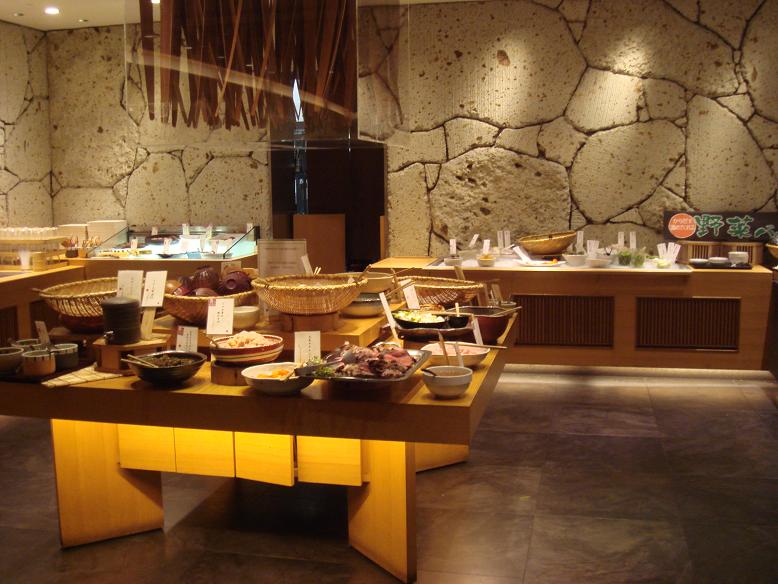
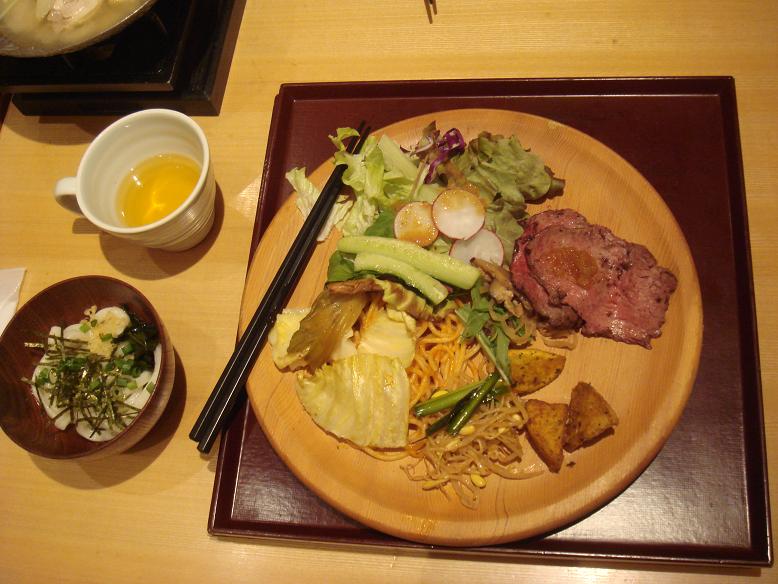
Time for my last supper in Japan 最後的晚餐, we both voted for buffet in 草楽 on the 9th floor of Matsuzakaya! ¥ 2480 each = CAD 31.00 (not cheap hey but I don’t think it’s too expensive compared to University Golf Club in Vancouver. With about the same price, 草楽 had more dishes).

The restaurant claimed that they use seasonal ingredients without any additives to meet the health and natural concept. Sounds Good!


Now I don’t quite remember what they provided … I only recall roasted beef, nigiri sushi, some local vegetables, carrot, potato, noodles, tempura, hot soup, cakes and desserts, tea, juice and red wine …

We stayed there from 5:30 pm till almost 7:30 pm and the restaurant was only 40% occupied, less customers than I expected. Still I enjoyed the buffet in this quiet and relaxing environment … no need to fight for food … hehe!

Time flew by too fast, next day was already May 5 … my departure day  L

I wore another jacket for the colder weather in Vancouver. While I went to the washroom in Chubu Centrair International Airport, I found a bag of 八仙果 in the pocket of my jacket. 八仙果 is like a licorice menthol of eight fruit and herbal ingredients for the purpose of comforting sore throat. Oh yeah … my mom gave it to me for my travel. This was the famous 李錦利八仙果 from Taiwan made of grapefruit, kumquat, Chinese date, orange peel, licorice, Buddha’s hand citron, peppermint, maltose (葡萄柚、金桔、金棗、陳皮、甘草、佛手果、薄荷、麥芽).

To express gratitude to my friend, I decided to give him the bag of 八仙果. His first response was “poopoo from the washroom?” (一舊舊屎???) Oh No … I was just coming out from washroom and the pieces of 八仙果 were in dark brown colour, no wonder my friend thought of feces.

Overall, this short vacation to Japan was quite fun with the travel from tourist attractions to local neighbourhood, from the ocean to the mountains, from the city to the countryside and from the historical district to the modern place. It was like travel from 21st century back to the Edo period and then return to the present time again!